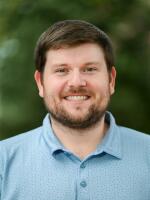
In this very special edition of Chord Drift with Paul Jorgensen, Rob Beckett and Clark Gibson join Paul live in the Earl Winger Broadcast Center at WUTC to reflect upon Big Ears Festival 2026 in Knoxville, TN.
Here's a transcript of our conversation, so you can follow along while you listen on your podcatcher.
Big Ears 2026 Recap Transcript
Generated by AI and spot edited
Paul Jorgensen: Hello radio friend, you are listening to Chord Drift with me, Paul Jorgensen. Yes, you are hearing me at the very top of the hour, not a piece of music that then I will come in after and tell you all about. Because this is a very special episode. As you may recall, I and two of my fine colleagues went up to Knoxville last weekend to attend what we like to call the Big Ears Music Festival, and in fact, other people like to call it that too.
And so to tell you more about it and to kind of bookend the podcast that we put out last week in advance of this — by the way, you can find that under "From the Green Room" on the wutc.org webpage, but also in your podcatcher, because of course you’re catching all of our pods there. Yes, go check that out, but this is the other end of that. And so, joining me in the studio is Mr. Clark Gibson.
Clark Gibson: Hello everybody, how’s it going?
Paul: And the aforementioned Robert Beckett.
Rob Beckett: Hello Paul, thank you for having us.
Paul: Oh, thank you for being here. It’s weird the last couple of days, as Clark, as you said, not getting together for breakfast in the lobby of the very distant Hampton Inn that we stayed at.
Clark: Yeah, the barely in Knox County Hampton Inn, right on the edge of Roane County, I believe. But yeah, it does feel weird to be back and it’s like, oh yeah, I think that happens after any big event that you go to, whether that be a sporting event or a music festival or anything, that it’s like, oh yeah, the world keeps turning and we’re back at work and you get to take those memories with you, but it is for sure over and we’re back to the real world now. So, but I’m glad to be back with you guys.
Rob: And it’s hard not to believe that we’re getting prepped for a — or we’re not getting prepped to go see some live music in the greater downtown Old City Knoxville area.
Paul: Yeah, yeah. Um, there was so much to hear, so much to see, so much to do. And then, yeah, it just kind of all just drifted away like — like — like the blossoms off of the trees in the spring.
So let’s talk about, first of all, overall impressions of the festival.
Rob: Yeah, this is — um, this is my third time going to Big Ears as a part of our festival team and, uh, it lived up to my very high expectations. It’s one of my favorite festivals just because it’s so unique in how you travel around Knoxville to the different venues, and they’re all inside. Um, one of my personal favorite venues that I got to see a few shows at was called The Greyhound, which was an abandoned Greyhound station that they turned into a venue and they had it in the round, which was really cool because there wasn’t — this was the only venue that they had at Big Ears that was in the round so you could — you could find a pretty good seat so you can see the different type of music. I know Paul and I, we saw SUSS there on I believe Thursday night.
Paul: Thursday night, yeah.
Rob: Yeah, it was and — um, it was part of their "American Apocalypse" program that they did, and they — um, in addition to playing music, they had videos playing on the walls and — um, it was a really cool way to end that Thursday night. So — um, long story short, Big Ears met my very high expectations, and I cannot wait to return.
Paul: All right, well we’re going to talk more about that SUSS show here in a minute, but Clark?
Clark: Yeah, a venue that I had never seen outside of Big Ears or last year going was The Bijou, which is kind of the opposite of what Rob was saying because The Greyhound was a brand-new venue that I think might have just been opened just for Big Ears. The Bijou, you can go see shows all the time. I’ve just never gotten the chance to for some reason, and Paul and I saw Isaiah Collier play some Coltrane songs. Uh, weirdly enough, I got there about halfway through that set and the usher insisted that she, you know, help me find my seat and lo and behold, I got sat right next to Paul, which was very funny. I just could not believe that, like, what were the odds? Um, but yeah, The Bijou Theatre’s great. Of course, The Tennessee Theatre, I mean, a gorgeous room. Like, it doesn’t matter what kind of music is playing in there, it just has this insane vibe that is very calming and it’s just a beautiful place. It’s — but yeah, Knoxville is a great city, and I had such a great time in Big Ears. Um, I would love to keep going to this festival as long as the station will let me because it is so cool to see all kinds of different music. Um, there’s something for everybody, but even the stuff that you’re not aware of, it’s probably for you as well if you like music. So, yeah.
Paul: Yeah, definitely. So, for listeners to know, there were kind of like almost two districts to it. There was the one side with The Bijou and The Tennessee Theatre, the various churches — except for one — and then kind of the Knoxville Civic Auditorium just geographically fell in with that. Then the other section, which was Barley’s and Mill & Mine and The Standard, up to the point, The Greyhound station that we talked about. So it was always interesting to get out of a show and not have something specific to go to, and then doing that mental calculation on do I want to make that walk up to the other side of the festival to go see such-and-such or should I just discover something right where I’m at?
Sometimes it’s not up to you, it’s the weather. Um, so it was one of the days, I think it was — was it Friday or Saturday that we had that little bit of rain?
Rob: I think it was Friday.
Paul: Friday, had a little bit of rain. I was down over by The Bijou and wanted to get out of it, also wanted to sit down. Not that many venues have seating available, but certainly over on that side way more seating than up at like the Mill & Mine side. So I went into this church, First Presbyterian in the chapel, and I sat down and I heard Nate Mercereau — I think I’m mispronouncing that, but he’s also part of the Openness Trio. Was unaware of him at the time. Went in there, it’s electronic music, um, but the way that he plays it has a very nature-sounding effect. You felt like you were outside. And certainly when — uh, some of his collaborators came in and played with him, where he is working on the — the keyboards and the looping machine and stuff like that, they’re playing whistles and rattling tambourines and doing other things to increase that atmospheric feeling. And so, this was just, "Oh yeah, this was great!" And then I ran into him a couple of days later - and I said, "Hey, are you that Nate guy that I just saw?" (Replies as Nate) "Oh yeah." I said, "Love the set. Here’s a sticker, here’s a business card. Let me know next time you come into Chattanooga."
Clark: Yeah, that’s something that I think is very special about Big Ears is, you know, a lot of these artists aren’t on the level where, you know, everyone would recognize them. So I think there’s a level of comfort with the artists and performers that, "Oh, I played my set Thursday afternoon, but I have this wristband and I have a hotel room. Like, I’m going to go check out all this cool stuff." And most of the artists that I would listen to, uh, would name a few names and say, "Wow, I can’t wait to see them tomorrow night. Like, that’s—that’s going to be great." Um, I mean, I saw Reggie Watts uh, just hanging out at a late-night show and stuff and just talking to people and, uh, I think it’s really artist-forward in that way and it feels like a lot of the people that go to the festival are also artists. So it’s — um, this really cool community of people that feel like they can all just hang out together and, uh, walk around and go get something — something to eat and, uh, yeah, just check out different venues and random stuff. It’s — it’s a great time.
Rob: Yeah, and I think a lot of artists — I would say probably every artist that plays at Big Ears — um, they — they bring their best stuff because they love performing at this type of festival that’s so eclectic. And, um, I think you mentioned Paul in one of our — uh, news posts which you can go on wutc.org is that Big Ears Festival is a festival for WUTC listeners because it’s so eclectic. You — um, and one of my favorite things that you turn to WUTC for is music discovery. You learn about artists that you don’t — you don’t hear on commercial radio or on your Spotify algorithm, but I have a handful of artists that I had no idea existed and now I — I can’t wait to hear more from them, like Ken Pomeroy, who Paul and I got the opportunity to see — um, was absolutely amazing, and Haley Heynderickx, and just so many more. I know you were pumped about Hayden Pedigo.
Paul: Mm-hmm.
Rob: But there’s so — there’s so many artists that you can discover, so if you have the opportunity to go to Big Ears, uh, we highly recommend.
Clark: Yeah, for sure.
Paul: Definitely. Um, and just to give you some ideas of the kinds of genre you will come across — uh, of course you will have indie, indie rock, you’ll have some country, jazz, classical, um, improvisational...
Clark: Experimental.
Paul: Experimental...
Robert: Very experimental, yeah.
Paul: ...very experimental. You’ll have emo, shoegaze, um, just almost every genre you can think of except for maybe like rock and roll.
Robert: But then there were two sets that we went to that were very rock and roll.
Clark: Yeah, that’s true. I think the only genres that they stick away — like, you know, don’t choose to book — are things that you would hear on commercial radio, like you do get bits and pieces of that, like — like you said, some of the more like, I guess, just indie rock or like country stuff, but it’s — it feels very anti-like commercialization of art and music. Um, like you do really get every genre except for like, you know, bro-pop country or something like that, you know, which...
Paul: Yeah.
Clark: ...there’s a time and place for it, but it’s apparently not Big Ears, which is fine.
Paul: Sure, yeah. And of course you have exceptions to that: David Byrne.
Rob: Yes! Yes, that was one of my highlights of the festival. I got the opportunity to see him on Friday night at the Knoxville Civic Auditorium and it was probably one of the most magical concerts I’ve ever been to because of his artistry and how he decided to use the stage and choreography and the different musicianship. Uh, one of the things that if you do get the opportunity to see David Byrne is nothing is in place, everything is always in motion, so for two hours — um, they did not stay still and they did not stop. And — um, other than just to talk to the audience, he did—he did have some healthy banter. He had like a little bit of slideshow, he showed pictures around Knoxville — um, he talked about some — some different things about what, you know, certain songs mean and where they came from and — um, also mixed in some Talking Heads favorites as well. So one— um, just definitely probably the highlight of the festival for me. Um, and I’m still not over it. And the fact that he is 73 years old and still performing at that rate and just — he’s so prolific and — um, just a — just quite the musician. Like, it’s — it’s unbelievable.
Clark: And what was that piece of advice that he gave the audience that it stuck with me once you told it to me? The nicest thing you can do...
Rob: Or the most punk thing you can do. Oh, the most—the most punk thing you can do now is to be generous, humble, and kind.
Clark: Oh, great advice.
Paul: Yeah, it really is. Another big name that was there was Robert Plant. We didn’t get a chance to go see him because that was a ticketed event. Um, but — uh, rumor is that show was very good.
Rob: I’m sure it was.
Paul: Yeah. And then — um, kind of from that — those were really the two biggest names that were there at the show. ut then we saw MJ Lenderman.
Clark: Yeah, which — uh, I could go on and on, there might need to be a separate podcast about — about that. Um, I think these guys had a little bit of fun at my expense because I — um, was so swooned by him and his presence on stage. And — uh, I also wanted to make note that it — um, and this is a cool thing about it: there are a lot of legacy artists that are at this stage in their career where they might be with like a jazz trio and, you know, they’re doing their experimental artist thing after they’ve made a name for themselves. So there are a lot of like older acts there — um, and then some of the younger acts are playing this traditional roots music that is, you know, maybe for an older audience too. Um, whereas that MJ Lenderman show felt so my generation, um, which was really cool to see in that environment. And of course I was sitting next to an older gentleman that knew all the words to his songs and I could tell they hit him very hard as well. So that was really cool. Um, but yeah, I just don’t get to see many shows I think like that where it’s like, this is an up-and-coming star of my generation that is making music that’s pretty important to me. So that was definitely a highlight of the weekend for me. It was great.
Rob: You definitely do get a healthy mix of those legacy artists that are, you know — um, like for example — um, Thurston Moore or Nels Cline who have been around for a while — um, doing something experimental or — or doing something that’s special to them, but then also juxtapositioning that with like an MJ Lenderman and the Wind who is having a come-up right now. Um, there’s just such a healthy mix. So there’s something for everything — something for everyone at Big Ears.
Paul: Yeah, yeah. And — and just to remind folks, if those names sound familiar but you kind of can’t place them: Nels Cline with Wilco and Thurston Moore with Sonic Youth.
Rob: Yes.
Paul: Also, Steve Shelley played in Winged Wheel and in Orcutt Shelley Miller. He’s the drummer from Sonic Youth. I don’t think the two of them got together to jam.
Rob: Ah...
Paul: Uh, you know, but it was possible. It could in a universe have happened. Um, something that we can all hope for. Um, but you talked a little bit about the — the established artists and then the younger ones. Another thing that I noticed was shows where an established artist has young performers with them, and again they’re working in a trio or a quartet. So — uh, oh, the name — uh, John Scofield.
Clark: Yes.
Paul: He had a trio that he led. Um, there was Pat Metheny.
Rob: Pat Metheny, yeah. That was another one.
Paul: A couple of different ones in the set. And so that was always a really fun to see these established folks helping these younger artists develop and give them something of an audience as they’re performing. The kind of the other end of the spectrum over that is Don Was and the Pan-Detroit Ensemble, which were all established musicians from the Detroit area and they blew the doors off of the joint.
Rob: They were—they were absolutely unbelievable. I know we caught them on a late Saturday night and they played way beyond their time, but — um, that was completely all right with us because they were absolutely incredible.
Clark: Yeah, it — it was really cool to see that — that sound. I remember telling you guys when we left, like, yeah, I might have been up at midnight-thirty for a show before, but it was a bar band at J.J.’s or something. Like, I’ve never this late at night been in such a grand theater, the Tennessee Theatre, and seeing just such a full loud band of like really well-established musicians. And something about, you know, the Pan-Detroit Ensemble, which is Don Was’ band — um, I — I wanted to make this point earlier: like, there’s a bit of research that needs to be done I think before you see bands there because I would see a mile-and-a-half long line for something and look at the schedule and go, "I don’t — I have no idea who that is," and then someone would go, "Oh yeah, they produced every Pink Floyd album," or something like that. But now, they’re just doing their — their whole thing, you know? So there — um, in — and that’s how I felt with Don Was’s band. It’s like, "Oh yeah, this guitar player played with MC5. Like, this trumpet player was best friends with Miles Davis or something like that. And it was just like, what in the world are we seeing right now? That’s so impressive, you know?
Rob: I’m going to say in one of the things, if you want to learn more about Don Was — um, our very own Clark Gibson got the opportunity to interview him pre-Big Ears. So that is on WUTC.org. But a highlight from that show was as a Grateful Dead fan, they performed "Blues for Allah" in its entirety in honor of the 50th anniversary of that album and of course mentioning that we just recently lost Bob Weir and he mentioned that in his — um, having the opportunity to perform with him and The Wolf Bros. So that was definitely a highlight from that show.
Clark: Yeah, it’s interesting to me that he brought that up and — and wanted to pay such tribute during that show because out of all the things that guy’s done in his career — I mean, he’s played or produced with every big name from his generation forward — um, but he mostly spoke about what an impact Bob Weir had on him as well as the Deadhead community as a whole. Um, I mean, he — he could speak at length — um, and I think he does most interviews and public appearances that he has — um, about that community and playing with Bob Weir and — and what he taught him. Um, so I just thought that was really cool that he’s — that — I mean, that really just made an impact on him and — and I loved their rendition of Grateful Dead songs too. It’s just this huge brassy band with like a shredder guitar player doing it. It was like, this is a great version of — of a Grateful Dead song.
Rob: They said that they were going to "Detroit-ify" it, which I think they succeeded and it was awesome.
Paul: Having lived in Detroit, I can say for certain, they did do that.
Rob: Yeah.
Paul: So that was a great show.
Clark: Yeah, just — um, I — I think we all agree we cannot recommend going to see Don Was enough. Um, that one was — was truly spectacular and, yeah, I guess that — that is one takeaway you mentioned about doing the research in advance. So all of us did some research ahead of time. And of course we did our earlier podcast. By the way, you can find all of our Big Ears coverage at WUTC.org and — um, look for the Big Ears 2026 tag on there and you should be able to find us, including the Don Was interview that we just referenced.
So we did do some — some research ahead of time, but I did not realize how little I knew after having done that research until I actually got boots on the ground. Because of course this was my first time going to this festival or a festival similar to it. Uh, and to also kind of set the table for folks, and we mentioned this before, all of the performances are inside venues. Um, there’s nothing outdoors, there’s not some big outside stage where you’re fighting the weather and stuff like that. It’s only when you’re going in between these venues that you’re dealing with — with the weather outside.
So things like how small the performance space is at the Jig & Reel. And so this might be an act that is not well-known at all, but it will fill up fast. Other ones like the Tennessee Civic Auditorium, in most cases there is still ample room even if it’s a big name like MJ Lenderman, to be able to get in and get a seat. Also, people are constantly going in and out of these shows because you might be in one — but "Oh, Masego’s playing over at The Standard right now, so I’m going to leave this show so I can go stand in line over there." So even if it’s at capacity when you first try to get in, if you hang around a little bit, it’s not going to be long before you can get in.
Rob: And one of the things I do like bragging on the Big Ears app is they do a really good job of telling people if they have their app notifications on and have downloaded the Big Ears app that shows are at capacity, "Why don’t you try this person at this venue?" or "This person at this venue?"
Clark: Yeah, that was a real big help actually, because it would prevent me from taking the longest walk that I could take that whole weekend and be like, "Well, all right, I guess I’ll just stick around here." Um, but back to the size of the venues and stages, I — I just wanted to say, I — I would assume that each venue just kind of still keeps their back-of-house people for that weekend or maybe there’s some sort of overhead by Big Ears Festival like audio-visual people, but either way, it did not matter what stage I went to, big or small — um, it — I mean, it was like impressive sound no matter what. I didn’t go into one place and think like, "Oh, it’s a little — little hot in here or a little bouncy," like it was just kind of spot on almost everywhere.
Paul: Yeah, and I would presume that for venues like Jackson Terminal, for example, where they regularly have performances, that yeah, probably they were using their own folks. But I’d be curious to find out who they got to staff the churches, the Greyhound...
Clark: Yeah.
Paul: ...you know, those places that aren’t normally venues for bands. Um, yeah, it’s a good question. I don’t think we’ve got the answer to that, but something to think about. And certainly the folks that were doing the back-of-house — you know, the sound and the lights and staff like the different bars and merch tables and stuff like that — they did an excellent job of having good coverage everywhere. I don’t think I saw any place where I was saying, "Oh yeah, too bad they don’t have somebody else here helping out." Seemed like they had the right amount of staff at every place I went.
Rob: Yeah, I think that’s one of the benefits of Big Ears is since all of the venues are inside and they’re used to having music and it’s not just a stage in like a field — um, or a stage in like a downtown area — um, sound was always almost perfect, like perfect. It — like I didn’t — I didn’t notice like Clark was saying, I didn’t notice, "Oh, they need to turn this person’s volume up, I can barely hear them." Like, everything sounded amazing — um, and that’s what we come to expect from Big Ears. They — um, it is a festival for audiophiles, I will say, because my — um, I’m strict when it comes to audio and it met my very, very high standard.
Paul: Yeah, I think I only went to one or two shows where I was saying, "Oh, that vocal needs to come up or that bass needs to come up." In general, yeah, the sound was — was excellent.
Alright, enough talking about the venues and sundry. Let’s get back into some of the music. So what was a surprise for you, Clark?
Clark: Um, it’s weird to say that this is a surprise because I was aware of Reggie Watts already. Um, mostly for those of you that aren’t familiar with him, he kind of went early viral on — on the internet before that was super common, of kind of having like dirty joke kind of songs, and I was like the perfect age for it, you know, like a preteen coming into teenage years. So I kind of thought his music was just like a pre-planned set of like comedy music strictly. Um, what I did not expect was him to come out on the stage and do 10 minutes of stand-up comedy that seemed fairly improvised and then for him to come up with songs I think mostly on the spot as well. Um, he played a piano once, but outside of that, every sound that was being made with his music was just his mouth with some loop pedals and of course a few like effects pedals and stuff like that. Um, and you know, he would spend five or six minutes making the craziest noises and running around stage and it’s like, "Okay, I don’t know how much more of this I can handle, it’s like this is just kind of crazy." And then within the next 10 minutes, he would hit a button on a loop pedal and all those crazy sounds he had been making for 10 or 15 minutes just sounded like Sly & the Family Stone out of nowhere, or something like that. And then he would just improvise lyrics over it, and I don’t think he cared so much about the lyrics as much as the melody. So he would almost just kind of sing a melody and almost just kind of mumble words around it, and some of it had me wanting to get out of my chair and dance. Some of it had me, you know, laughing as hard as I could. Um, I mean, just a pure entertainer. It — I was excited to see him, but it surprised me in the sense of — um, you don’t know what he is until you see him live, I think. Um, and I mean, that was the most thoroughly entertained through an entire show that I was all weekend. So shout out to Reggie Watts, he is amazing. He’s so cool. Go see him if you get the chance.
Rob: Yeah, um — my surprise was I mentioned her before, Ken Pomeroy. Um, Paul and I got the opportunity to see her at The Point, which is one of my favorite venues because it’s an older church, but it has a balcony. Um, so there’s — so you’ll get a good seat regardless. It is one that fills up very quickly though. But — um, she was unbelievable as somebody I — um, went in blind. I just was going through the app and said, "Oh, this looks interesting," and — um, she completely blew me away. Um, she is an interesting artist. She is Cherokee. Um, she’s — I think she’s in her early 20s, but she’s from Oklahoma and — um, she did a really good job of, obviously, she has a really good voice, very talented musician — um, really, really enjoyed a lot of her songs, but she did a good job of crowd — um, crowd work for somebody so young. She — she told a lot of funny stories about touring with or performing with Ricky Skaggs and about how — um, I — I can’t really remember the story and it was a long story, but — um, the point of it was "We tune because we care."
Paul: That’s right.
Rob: That became a running joke.
Clark: Can I do another big surprise?
Paul: Oh, please do.
Clark: Yeah, don’t mean to step on any toes here. Um, the last thing we saw — or that I saw — on Sunday night was S.G. Goodman. Um, I was somewhat aware of her and thought: Yeah, why not? Like, I’ll check some of this out before I head back. And — man, she just blew me away. I loved how funny she was — um, her music is — like, if you’re into that whole like this newer wave like of good country, like the Tyler Childers, Sturgill Simpsons of the world, like you’re going to love her music. Um, and I would like to say that when I was putting together a playlist — um, my show that airs tonight at 9:00 PM is going to be a Big Ears special and some of the best of what I heard. Um, the ladies had a weekend this weekend, man. Like, most of the things that I enjoyed were some really cool ladies: Natalie Bergman, Mary Anne — excuse me, Maureen Bradley, S.G. Goodman, just to name a few. Um, there was a very lady-heavy festival as far as some of the coolest acts I saw. Um, I mean, you put me onto Masego, only saw a few minutes of that, but like she was unreal. So yeah, shout out to all the ladies at — at the Big Ears this weekend, they did a great job.
Rob: Yeah, agreed. Um, it’s the ones that you mentioned, of course. Um, we also saw — oh, Rob, I cannot remember her name. She’s from Ireland and she was doing all the blues...
Rob: Oh yeah, Maureen Bradley!
Paul: Okay, okay. No — um, okay, I’m — I’m going to change over and because I was actually thinking of Anna Tivel.
Rob: Yes!
Paul: Yes, who played the same venue...
Rob: Yes!
Paul: ...right before. And so, I got the names crossed over. Anyway, that happens. Um, she was really strong. I loved Maureen Bradley, I loved her — um, command of blues. She did a version of "When the Levee Breaks" that goes back to the original that was just outstanding. I played that on my show yesterday. Um, Anna Tivel, she was very much similar to Haley Heynderickx, whom I think we can all agree was another discovery for us. Um, for sure. Similar type of voice, but then very different styles when it came to playing, where — um, Haley Heynderickx was more Spanish guitar influenced, Anna Tivel was more in the traditional folk/country space. And of course, Anna had a full band, Haley Heynderickx was just solo on stage.
Which brings up another great point about something that I was very surprised by. And so maybe this is going to be my surprise choice. There were acts like tUnE-yArDs, who were great, we opened up the festival with them. No, no — no, we opened up Deerhoof at the festival. Yes. But the next day, it was tUnE-yArDs. Two people up on stage, making a lot of sound, sounding like a much bigger band. Um, Madison Cunningham with her musical partner at the Tennessee Civic Auditorium. Again, two performers sounding like a lot more people. There were some acts that really did an excellent job of taking advantage of what they had and making it seem a much — I don’t want to say richer, but a more full-on sound than one might have expected. And I thought that that was really a delight.
Clark: Yeah, so did I. Um, did you say Madison Cunningham? She played at the Auditorium, right?
Paul: Yeah.
Clark: Dude, yeah. I — um, that was one of those where Rob and I just kind of were like, "Yeah, let’s just find somewhere to sit down and hang out for a minute." And — uh, that blew me away. I think the guy was playing like an oboe or something, some sort of woodwind instrument that made this real deep kind of humming sound, and the set — uh, design, I guess you would say, the stage design was beautiful. It was like very nature-heavy and — um, and you know, at first I might have got a little sleepy. I was like, "Oh, this is super chill, I’m going to be quiet and hang out." And then she would hit a pedal and just absolutely shred on her acoustic guitar and it would get real noisy and rocky and ... wow! So yeah, she made my playlist as well. Madison Cunningham was great.
Paul: Yeah, she was on my list and of course I did an interview with her in advance of Big Ears. So if you go to wutc.org, you can find that interview. I want to mention a couple of other things about our fine website before we get into more of this. So Clark, I think you mentioned that there’s a show tonight at 9:00 PM?
Clark: Yes! That show is called "The Moonlight Mile" hosted by yours truly. Um, it is some say kind of hard to figure out — and I’m talking to you, Sam Blevins. Um, he likes my show but it — it’s hard for him to understand — like, he just doesn’t know what the theme is. And I like to tell people, it’s for those of you that have to be in the car at 9 on a Wednesday night. So I’m talking to you restaurant people, uh, you know, whatever weird shift you might be working. Um, it’s the — really anything that fits the vibe of you’re riding home after a long day with all the windows down and these are songs you can turn up really loud. So some of it’s really calm, so there’s a lot of blues, funk, R&B, classic rock even — um, country. I mean, it’s — it’s kind of a good mix. I mean, but I’ll throw some random stuff in there too, there’s been some hip-hop, there’s all kinds of stuff. So, I mean, you guys get the deal, you’re public radio listeners so you understand that it’s a little bit of everything.
Paul: Yes, and one forward promo: you’re getting a new time slot, aren’t you?
Clark: That’s true! Yeah, I — am moving to Monday nights at 9:00 PM. So those of you that are fans of "Chord Drift" are very familiar with that time slot. I’ll be taking over for that starting April 20th, I think that’s the first Monday. So — uh, if you like my show or if you just like listening to the radio on Monday nights, there’s a heads-up for you. "Moonlight Mile" over Monday at 9 — coming soon.
Paul: Radio friend, of course you love his show. You tune into it all the time and now you’re excited about it moving to Monday, as we all are. Um, want to mention a couple more shows. Of course, I’m here with you until noon and then we’ve got "Fresh Air" from 12 until 1. The one, the only, the Haley Solomon will be in for "The Haley Solomon Show." Um, from 3 until 4, of course those great local discussions with our very own Ray Bassett, "Scenic Roots." We’re pointing at him right now, he’s behind a door but we know he’s there. Um, and then from 4 until 7 of course we’ve got news with our good friends at NPR with "All Things Considered." "Latino USA" comes in at 7 PM. At 8, Brent Stott, "Louder Than Bombs".
Rob: Great show!
Paul: 9:00, as we mentioned, "Moonlight Mile" with our very own Clark Gibson. "Thacker Mountain Radio Hour" at 10:00 and "International Americana Music Show" rounding out our broadcast day at 11:00 PM. So, so much for you to listen to, so keep your dial tuned. You’ve got the 88.1 FM, you’ve got the HD1, you’ve got the go online to wutc.org and stream it from there. You’ve got the mobile app — of course you do, because you’re out and about sometimes and you have to take us with you. You can stream us right on there.
So many ways to listen, so many ways to engage. And then when you go to wutc.org, up in that corner, the right-hand corner, it’s beautiful, it’s red, it’s a donate button. You can support this very radio station. Help us stay on the air for today, tomorrow, and next Tuesday and further.
Clark: And I guess we could go ahead and forward promote that — the pledge drive is starting up soon.
Paul: That’s a good point!
Clark: Starting up next week. So those of you that are familiar, you know the drill. Um, it’s happening and — uh, we need your support more than ever. So — uh, we’ll be — it’s really exciting. I mean, the pledge drive is — it’s funny because it’s — it’s a little extra work and we’re asking things of our listeners. However, I love going live with you guys all day and — uh, getting some direct feedback from our listeners who care, and so we really appreciate that. We’ll be starting that up next week.
Rob: And it’s a perfect time to donate because we have our Givecampus page giving us a countdown for when the pledge drive starts. So if you give now, you get your gift in early and you can know that you’ve helped support this public radio station now and in the future.
Paul: Yeah, want to make mention of one other way. So you’re excited about the pledge drive, we all are. I know you are, radio friend. So next Thursday, that kicks off. But maybe you’re like, "Mm, I really want to do something around town. I wonder what kinds of things I could do that would also go to support WUTC." Well, if you go to wutc.org/tickets, we have various ticket giveaways there that you can go and sign up for. We’ve got some shows that are coming up that you can use our tickets link for, and maybe you’re into that football — um, what we Americans call soccer — Chattanooga FC. Maybe you want to go see a game. If you buy your tickets through our website, we get to have a portion of those proceeds. So it’s a great way to entertain yourself and support this very radio station.
Clark: Hey, and not to mention the merch store as well! If you would like something in return for your gift to the station, we have some great merch up there on the merch store, pretty easy to find if you go to wutc.org.
Paul: There you go. Alight, so back to our Big Ears coverage and we’re going to start to kind of wrap this up. But I know that on my show probably through the rest of this week I’m going to be hitting more of those artists. Of course, you talked about tonight you’re going to be doing that Clark as well. And there are so many artists. There are artists that, you know, we wanted to go see and we couldn’t for one reason or another. Um, for me, basically my playlist that I had queued up for today is a lot of that: Hania Rani I wanted to go see, she had multiple sets that were all inconveniently placed in the schedule for me. Um, that made me sad. Chris Thile, I wanted to go see. Um, Either/Orchestra, Tom Skinner, Iliana Glass, Karen Mantler ... I mean, the list goes on and on. Did you have anybody that you weren’t able to see that you wanted to that was not a ticketed performance?
Clark: Um, funny enough, Chris Thile. I went to go see him and from memory the day before I was like, "Yeah, 3:00, Tennessee Theatre. I’ll be there." I got there in time, stood in line, had a great conversation with a lady and — uh, gave her some stickers. She loved the station. And — um, the more time that went on, I — I kept thinking, "This feels weird. This cannot be the Chris Thile show." And — um, 20 minutes past 3:00, "Wow, he’s really taking his time here." And — uh, I honestly don’t even remember who it was. It was kind of like a jazz piano and then a singer, and as soon as it — it’s like it hit me as soon as they came on, "Oh yeah, I’m not in the right spot." And then by the time I noticed where I—you know, where I needed to go, Chris Thile was 30 or 45 minutes into a set and then it was a long walk so I thought, "Well, some you win, some you lose." I don’t know why I didn’t check the schedule again.
Rob: Festival tip number one: always check the schedule.
Clark: Always check the schedule. You try to keep these things in your head. You’re like, "Okay, I’m going to do this and then do this and then do this," and then poof!
Paul: Well, there’s this thing too that when I’m walking I feel like I’m on a mission. Like, I’m not stopping to look at my phone, I’m not, you know — it’s like I just — I had tunnel vision and it was like I know where I’m headed and I know what time I need to be there.
Clark: Exactly, yeah. So yeah, I just kind of got that tunnel vision of, "Well, I know where I’m going, I’m not going to stop and check the schedule, that’s for amateurs." But it isn’t.
Paul: We’re amateurs. Yes. Real briefly — um, one thing that we should note is in addition to music and all of the great artists, there were a couple of films we were able to see. Um, my personal favorite was how we opened up our festival on Thursday early afternoon — um, was "The Last Critic" about Robert Christgau of The Village Voice. Um, I had put this on both of y’all’s radar and — um, I was a little skeptical. I was like, "I’m — I’m going to see how a movie about a critic would — would translate." But — um, we had the opportunity to — uh, hear the filmmakers — um, actually moderated by NPR Music’s very own Ann Powers. Um, and it was absolutely unbelievable. It was — it was such a — it was such a great film. Um, it kept me captivated — um, throughout the runtime and — um, how Robert Christgau, if you’re not familiar with him with The Village Voice, um, was able to kind of turn the art of music criticism into, you know, an art form, how he would tell short stories, how they could be super witty or super scathing or — um, leaps or — put — put praise on one album and poo-poo another. Um, it was — it was such a fun watch.
Paul: Yeah, I would — I’m really hoping that the documentaries are going to be available on various platforms so we can go back and look. But we saw another one, didn’t we?
Clark: Yeah, I — excuse me for flubbing up the title here. Something — "Newport and the Great Folk Dream" or something like that. Um, it came out this year actually and, man, what a great film that was. I definitely preferred the Christgau film just because it was — it was a — like a music-based documentary but it was told in such a way — I mean, it was hilarious and just kind of a slice of life of what he’s up to these days — um, whereas the Newport one, it was a lot more like a traditional — uh, music documentary. The coolest aspect of it was apparently, and Paul and I we were very confused about how this huge organization and festival air-quotes here "uncovered" some — some footage that they had from I think 1963 to 1966, something like that. But — um, it was so — I mean, you know the Bob Dylan, the Joni Mitchell — uh, excuse me — Joan Baez. Yes. So you know that, you know, some of these folk heroes of the 1960s were there and it — it feels like a story that’s been told. I just kind of wanted to see it anyways. Um, but what I didn’t realize is that like a young Taj Mahal before he was well-known at all would hang out at these festivals and jam with people. Uh, The Stanley Brothers, like the Doc Watson, there were a couple of like bluegrass greats that it’s like, "Oh yeah, of course they fit in at the Newport Folk Festival, that’s what they do," but just the stories of like them at this boarding house late at night and all these like legendary bluesmen from even the 1920s and ’30s, like Mississippi John Hurt, um, just staying up and drinking and playing guitar together all night — like that just sounded so magical, you know? So that was — that was a really cool film as well.
Paul: Indeed. And then — um, Rob and I went to a — uh, Q&A that they had going on at the Blue Note Lounge when we — uh, tucked in there. So that was "Emancipation Proclamations", and that was — uh, hosted by Larry Blumenfeld and he was in conversation with Melvin Gibbs, J.T. Lewis, Georgia Anne Muldrow — although I don’t think she actually made it to the thing. And then — um, Brandon Ross. So it was a lot of conversation around — uh, race and the music industry and — and jazz in particular. It was a really interesting conversation and again it was one of those kind of delightful things. We just were buying time until we went to the thing we were going to go to and then stuck in there and, you know, we’re looking at the Blue Note merch, which was all awesome. But — um, then I’m like, I keep hearing their conversation. I’m like, "I think I need to sit down and pay attention to this a little bit more." And so that was really nice.
So one of the things that because of where we were located in our hotel, we had to spend a lot of time in transit between Knoxville and there. So it kind of cut down on the amount of time we could go see these — uh, conversations and the — these documentaries. One of the ones that I wanted to go see was — uh, they had a Joe Boyd documentary across two days, I think it was Friday and Saturday mornings. And — it’s played at the festival before, and it keeps kind of changing and growing. Uh, but it just didn’t work out because of, again, transit.
But then, I’m getting lunch on, I think it’s Saturday, and I’m waiting for my food. By the way, if you go at lunchtime to get food, guaranteed you’re going to wait for that food to come out regardless of where you get it from. Anyway, I’m sitting there and right next to me on the stool waiting for his order is Joe Boyd. Oh wow! So I got to chat with him a little bit and mostly we were talking about restaurants and the service industry and how these folks are working really hard and, you know, all of this stuff. But yeah, he was a very nice guy — um, and I was very excited to get to meet him. You know, he produced, I think it was the "Arnold Layne" single for Pink Floyd, wow, maybe some of the other early ones, and then he did "Fables of the Reconstruction" with R.E.M. If you go look at his discography that he’s produced or helped with, it’s just a who’s-who in a variety of genre. Uh, so yeah, so that’s a part of the festival that I think doesn’t get talked about quite as much but definitely should be on your radar if you’re planning to attend.
Clark: Well, and back to just seeing all these artists out and about randomly, I mean, when else are you going to see Joe Boyd in in downtown Knoxville just like getting a burger, you know? Like, it’s just so cool that this festival brings eclectic people from all over the country and the world to just like sitting next to you on a bar stool at some greasy spoon, you know? It’s — it’s crazy.
Paul: Well, and too I’m guessing if you were around town, probably on Tuesday or Wednesday, you probably saw David Byrne biking around town with his camera taking snaps for the — for his shows. Of course he played too. I’m saying, the Big Ears Instagram folks were able to catch him in action.
Clark: That’s awesome!
Paul: That is — that is so cool. All right, so we need to wrap this conversation up. But between the three of us, we’re probably going to keep chatting about this for a while because it was such a wonderful experience. Mr. Rob Beckett, final thoughts.
Rob: Final thoughts: this Big Ears Festival was really special. Um, they introduced a lot of new venues — um, like I said, The Greyhound and — um, Barley’s as well. And it’s just — it's my favorite music festival because there’s something for everyone. So if you have the opportunity to go — um, it’s always the final weekend that — will — final Thursday and Friday — weekend into March. So if you plan accordingly, you’ll find some of the best music that you may or may not have ever heard of. So I cannot recommend it highly enough.
Clark: Uh, I guess I would have a few questions for those of you out there. Uh, do you like walking around downtown Knoxville and meeting lovely folks? Do you like music? Do you like discovery? Do you like film? Documentary specifically? If you said yes to any of those, it’s a great festival for you. Uh, it’s a great time and — uh, we cannot wait again until next year.
Paul: Yeah, and my final thought is we ran across people, listeners, maybe you, dear listener, who were at the festival and they saw us wearing our various WUTC sweet-sweet merch. Maybe they saw us wielding those new stickers that we have, WUTC stickers, and they came over and said, "Oh my gosh, you guys are so great! I love you so much!" And we’re like, "Thank you!" Uh, lots of shouts I heard for Haley Solomon as a show for music discovery. And quite frankly, again, all of our shows whether it’s staff or volunteers, you’re going to hear a wide variety of stuff. So it is kind of like going to Big Ears on a daily basis.
If you did go to Big Ears and you’re listening right now, give us your thoughts. We would love to hear them. If you want to go to — or if you want to email us at wutc@utc.edu, you can put them there. Otherwise, you can leave us a voice memo on the WUTC app. Oh, heck yeah! We would love to hear your thoughts about Big Ears.
Yeah, indeed. And some other folks, they love Chattanooga and want to come back — um, and some of the artists that we talked to have been through town and they would love to come back as well. So we’re sending out those vibes into the universe to get these folks to — to come back and radio friend, again, it was a great festival. If you have a chance, go. If we saw you there: Hi! It was really great to run into you and get to chat about music in the state. Two things that we love oh so much. Yes, we do.
So Clark Gibson, who are you again? Rob Beckett, is that your name?
Rob: Only when I’m not in trouble.
Paul: Oh, there you go. Yeah. Thank you guys so much, it was such a blast that long weekend — um, and thank you for joining me here on the "Chord Drift" show.
Rob: Thank you for having us!
Clark: Yeah, thank you, Paul.
Paul: Thank you!
_____
This transcript was generated using AI transcription. It is spot edited, but some errors may remain.